
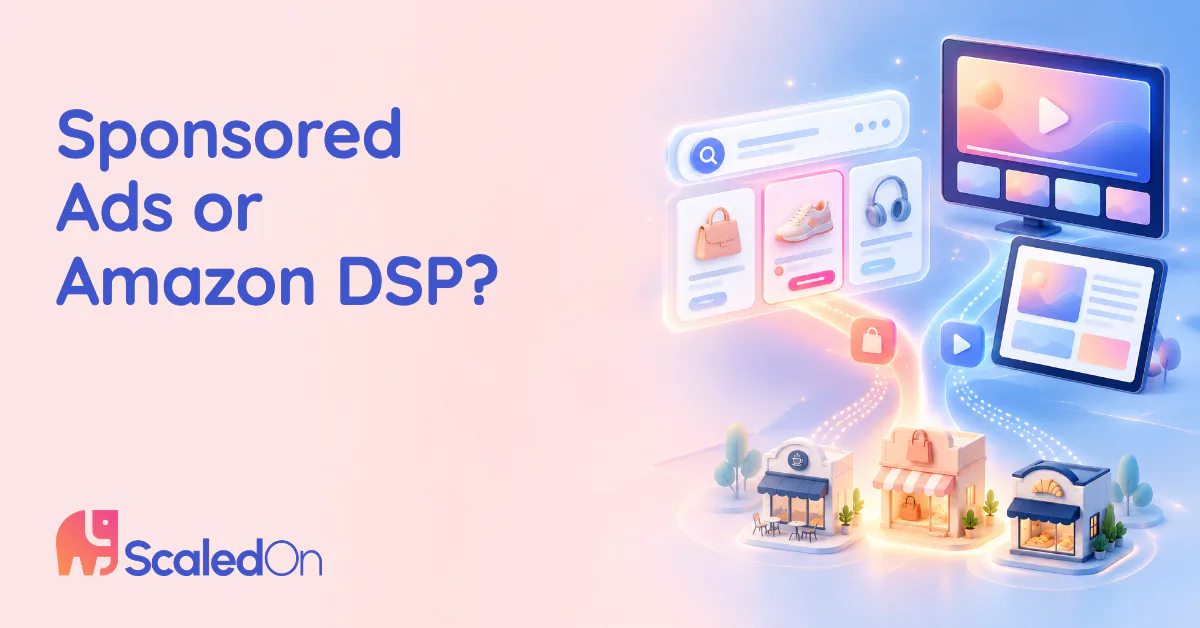
Update, October 15, 2026: Amazon has since folded Amazon DSP into a new platform called Amazon Ads Agent, and the display, video and audio side is now called DVA. The choice below still applies. Here is what changed.
When brands ask us about DSP, the question behind it is sometimes a different one: “Our sponsored ads have stopped growing. What’s next?”
Sometimes DSP is the answer. Sometimes it’s the wrong next spend. The two do different jobs, and spending on the wrong one first is a costly sequencing mistake.
What sponsored ads do
Sponsored ads are the ads shoppers see in Amazon’s search results and on product pages. Sponsored Products promotes a single listing, and can also run on select other apps and websites. You pick the products, choose the searches you want to show up for or let Amazon pick them, set a bid, and pay when someone clicks. The click goes straight to your product page.
That makes sponsored ads on Amazon a way to catch demand that already exists. The shopper has typed “orthopedic dog bed large” into Amazon. Your ad shows up while they are looking. Amazon only shows the ad when the product is in stock.
To run Sponsored Products, you need products listed on Amazon.
What Amazon DSP does
Amazon DSP (demand-side platform) buys display, video, audio and streaming TV ads, on Amazon’s own properties and across thousands of other sites and apps. That includes Prime Video, Fire TV, Twitch and Thursday Night Football, plus Amazon.com itself.
What makes it worth paying attention to is the data behind it. DSP targets people based on what they actually browse and buy on Amazon, not on guesses about who might be interested.
Two things set it apart from sponsored ads:
- It reaches people who are not searching right now. Targeting draws on what people browse and buy on Amazon, so you can reach likely buyers before they ever type a search.
- You don’t have to sell on Amazon to use it. Amazon offers DSP to advertisers who sell on Amazon and to those who don’t, with self-service and managed-service options. A furniture brand, a home services company or a school can buy ads targeted with Amazon’s shopper data and send people to its own website. We covered that side in what Amazon DSP is, and why it matters even if you don’t sell on Amazon.
The short version
| Sponsored ads | Amazon DSP | |
|---|---|---|
| Who sees it | Shoppers searching on Amazon, and on the select other sites where these ads run | People who match an audience, on and off Amazon |
| Where it runs | Amazon search results and product pages, plus select sites | Prime Video, Fire TV, Twitch, Amazon.com, thousands of other sites and apps |
| What it's good at | Turning existing searches into sales | Finding new buyers and bringing back the ones who left |
| Do you need to sell on Amazon? | Yes, for Sponsored Products | No |
Which one first
Start with sponsored ads if you sell on Amazon and any of these are true:
- You aren’t showing up on the searches that describe your best products.
- Competitors run ads on your brand name and your own product pages, and you don’t.
- You can’t say which searches make you money and which ones just spend it.
If the people already searching for what you sell aren’t finding you, reaching people who aren’t searching won’t fix that. It sends more traffic to the same leaky place.
Add DSP when:
- Sponsored ads are profitable and still growing, but each extra dollar buys less than the last one did.
- Shoppers visit your product pages and leave without buying, and nothing brings them back.
- You need new customers rather than repeat buyers, and the people who would buy from you don’t know your brand yet.
- You have a big moment coming, like a launch or the holiday season, and want people to know your name before they search.
Use DSP on its own when you don’t sell on Amazon at all. Then the question is not DSP versus sponsored ads. It’s whether Amazon’s shopper data finds your buyers better than the ad platforms you use now. That’s the question we answer first when we look at Amazon DSP for a business that doesn’t sell on Amazon.
Mistakes to avoid
Treating DSP as a fix for a weak listing. DSP brings people to your product page. If the page has a vague title, a main image that doesn’t read at phone size, or thin reviews, more traffic makes the problem more expensive.
Judging DSP on next-day sales. DSP does a lot of its work before someone is ready to buy. Where it’s available, use Amazon’s new-to-brand reporting alongside sales and cost per order, and watch whether searches for your brand rise over the following weeks.
Running the two in separate silos. Sponsored ads and DSP reach many of the same shoppers at different moments. When different people manage each one with different goals, you can end up reaching the same shoppers twice. Review reach and frequency across both.
Key takeaways
- Sponsored ads catch demand. DSP creates it and brings it back. They are not competing options.
- If you sell on Amazon, sponsored ads come first. Evaluate DSP once existing demand is being served profitably.
- DSP does not require selling on Amazon. For businesses that don’t sell there, it’s the part of Amazon advertising worth evaluating.
- Measure DSP on new customers and brand search growth, not just same-day sales.
If you’re not sure which one your brand has outgrown, that’s the kind of call we make by looking at your own numbers first. See what’s holding your Amazon sales back.