
Your customers are asking ChatGPT what to buy and who to hire. And ChatGPT now has ads. So the questions an owner needs answered come down to two: can a competitor pay to get recommended instead of you, and should you be paying for ads there yourself?
OpenAI says ads don’t change what ChatGPT recommends. A business can pay to show up under the answer. It can’t pay to be in it. That one distinction decides whether ChatGPT ads are worth your money, so it’s worth understanding before a vendor pitches you on them.
What your customer actually sees
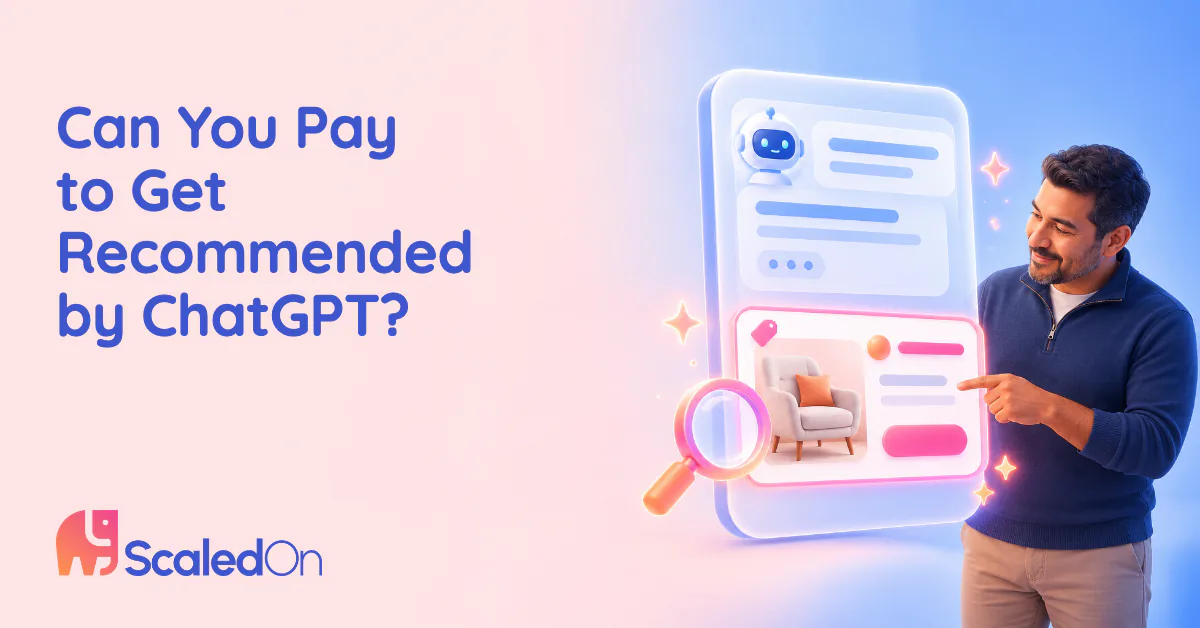
When someone asks ChatGPT a question, the answer comes first. Below it, there may be an ad, labeled as sponsored and set apart from the answer. According to OpenAI, an ad shows:
- the business’s name and logo
- a headline
- a short description of the product or service
- an image
- a link to a page on the business’s website
Two illustrations of how that could play out:
- Say a shopper asks for the best orthopedic dog bed for a large dog. ChatGPT names a few options. Under the answer, a pet brand’s ad could show its bed, with a photo and a link to the product page.
- Say a homeowner asks who to call about a furnace that won’t turn on. ChatGPT gives advice and may name some local companies. Under the answer, a heating company’s ad might offer same-week service, with a link to book.
OpenAI has also announced ads that appear while someone is creating an image in ChatGPT, for people on the free version or the Go plan. It said those ads would be labeled and kept separate from the image, and that testing would start later in October, in the U.S., with an initial group of advertisers.
Can a competitor buy their way into the answer?
No, according to OpenAI. Its stated rule is that ads don’t influence the answers ChatGPT gives, and that the answer is based on what’s most helpful to the person asking.
So there are two separate ways your business can come up:
- ChatGPT names you in its answer. You can’t buy this. We explained why ChatGPT names some businesses and not others.
- Your ad appears under the answer. You pay for this.
The second doesn’t replace the first. A competitor running ads still has to earn the answer the same way you do, and so do you.
Will your customers see your ad?
Not all of them. OpenAI shows ads only to adults on the free version of ChatGPT and on the Go plan. People on Plus or Pro don’t see ads, and neither do people on a Business, Enterprise or Education plan their company or school pays for. OpenAI also doesn’t show ads to anyone it knows or predicts is under 18.
Where you sell matters too. OpenAI started testing ads in the U.S. on February 9, 2026, and as of its August 11 update, ads had also launched in the United Kingdom, Mexico, Brazil, Japan and South Korea, with more countries to come.
Who your buyers are matters most if you sell to other businesses. A buyer researching you on a ChatGPT plan their company pays for won’t see your ad at all. If you sell to consumers, the free version is where an ad can reach them, though OpenAI also lets free users turn ads off in exchange for fewer daily messages.
And ads don’t follow every conversation. OpenAI says ads aren’t shown near sensitive topics like health, mental health or politics.
If you’re wondering whether your customers will feel watched: OpenAI says advertisers never see anyone’s chats, only totals like how many people saw or clicked an ad. Users can also hide ads and see why they were shown one.
Can your business advertise yet?
Maybe not. OpenAI is starting with a short list of business types:
- Products for the home and everyday consumer goods
- Local services
- Travel and entertainment
- Digital products and education
Finance, healthcare and legal businesses may be approved individually, generally in the U.S. only. That covers more than banks and clinics: OpenAI’s lists include insurance, mortgages, dental and vision care, and licensed law firms. Even then, a healthcare ad won’t appear next to a health conversation. Other categories are closed for now, including alcohol and tobacco, gambling, dating, cannabis and political ads. OpenAI says it expects to open more categories over time.
Whatever you sell, the ad and the page it links to have to match. An ad for one thing that lands on a page selling something else breaks OpenAI’s rules.
What it costs, in plain terms
Unlike Google Ads, you don’t pick the exact searches your ad shows up for. ChatGPT decides when your ad fits the conversation, based on what the person is asking, what your ad and website say you offer, and, if the person allows it, some of their past ChatGPT use. You can describe the kinds of conversations where your business belongs, but OpenAI says that only guides the matching. It doesn’t guarantee your ad shows up anywhere in particular.
You can pay each time someone sees the ad, or each time someone clicks. For clicks, OpenAI recommends starting with a limit of $3 to $5 per click. That’s the most you agree to pay for a click, not what every click costs. And a bigger limit doesn’t win on its own: OpenAI says the ad that best fits the conversation can beat one with a higher limit.
Three questions before you spend
- Is your business on the allowed list? Home and everyday consumer goods, local services, travel and entertainment, and digital products and education are open. Finance, healthcare and legal businesses may be approved individually, generally in the U.S. only. Anything else is closed for now, so being named in the answer is the only way in.
- Which ChatGPT plan are your customers on? Ads can reach adults on the free version or the Go plan. They don’t reach Plus or Pro subscribers, or people on a plan their company or school pays for.
- Does ChatGPT already mention you? If a customer asks about your kind of business and you’re not named, an ad under the answer is the paid workaround, not the fix. If you are named, an ad adds a second, more direct way in: a photo, an offer and a link straight to your page.
If the answers point toward ads and the holidays matter to you, here’s how much time a launch needs before Black Friday. If you sell on Amazon, there’s also a second route to ChatGPT ads through Amazon’s own pilot. And for a straight take on whether this is worth it for your business at all, read our straight answer on ChatGPT ads.
Key takeaways
- ChatGPT has ads. They sit under the answer, labeled sponsored, with the business’s name, logo, a headline, a short description, a photo and a link.
- OpenAI says ads don’t change the answer. A business can pay to appear under it, not to be recommended in it.
- Not everyone sees them. Only adults on the free version or the Go plan, not Plus or Pro subscribers or people on a plan their company or school pays for. Free users can also turn ads off in exchange for fewer daily messages.
- Some topics stay ad-free, including health, mental health and politics.
- Only some businesses can advertise yet: home and consumer goods, local services, travel and entertainment, and digital products and education, with finance, healthcare and legal approved case by case, generally in the U.S. only.
The first question is whether ChatGPT names your business at all. Get a free AI Visibility Snapshot to see what it says when your customers ask. If ads are the next step, see our ChatGPT advertising page.
Sources
- OpenAI: Testing ads in ChatGPT, originally published February 9, 2026, updated August 11, 2026
- OpenAI: Our approach to advertising and expanding access to ChatGPT, January 16, 2026
- OpenAI: Building advertising for the way people use AI, October 5, 2026
- OpenAI Help Center: Ads in ChatGPT, the basics
- OpenAI Help Center: Create ads for ChatGPT
- OpenAI: Ad policies
- Amazon Ads: Amazon Ads announces new integration with ChatGPT, September 10, 2026