
Furniture advertising & home goods marketing
Home Goods and Furniture Brands Lose Sales on What a Shopper Can’t Touch
Is it in stock near me? Will it fit? What does it really look like? Can I get it delivered? Furniture and home goods shoppers answer those questions online before they buy, in your showroom or on your product page. We make your ads, your listings and your pages answer those questions first, so the people who look have what they need to choose you.
We look at your ads, your listings and what shoppers find when they search for you, before any conversation about working together.
- No Long-Term Contracts
 Google Partner
 Amazon Ads Verified Partner
- Human-Led. AI-Accelerated. Always Accountable.
Real results
What This Looks Like in Real Accounts
None of these is a furniture store. Each solved a problem a furniture or home goods business has: a considered purchase, a price, a catalog, a sale on a store floor.
94%
More online sales
A pet furniture brand selling a $115+ product grew online sales 94% in its holiday campaign, with search ads, Google Shopping and ads that reached past visitors again over a long consideration period.
Read how a pet furniture brand grew online sales 94%$40 to $45
Unit price, up from $18 to $20
A heritage consumer brand took its pricing back from Amazon by moving from wholesale to selling on Amazon itself, rebuilding its A+ content and brand store, and repricing. Chargebacks went away entirely.
Read how a heritage brand took back its price14.5%
More in-store sales
A women’s fashion brand expanding into Walmart stores ran mobile ads around the stores carrying its product. Stores with the ads sold 14.5% more than a control group without them.
Read the in-store sales case study170%
More Amazon sales in 9 weeks
A gardening brand with thousands of products had its catalog split into categories, each with its own ad plan, while its copy, pictures and A+ content were rebuilt. Conversion rate and Buy Box share both doubled.
Read the gardening brand case studyThe problem
Which of These Is Happening to Your Furniture or Home Goods Business?
Stores and online brands sell the same sofas, rugs and bedding with different problems. Find yours.
If you run a furniture or home store
Shoppers decide online, and your floor isn’t online
They check what’s in stock nearby before they drive anywhere. If your inventory isn’t on Google, they see a store whose is.
Your ads reach people you can’t deliver to
Google’s default location setting also shows ads to people who have only shown interest in your area, not just people who live in it.
You can’t tell which ads brought people into the showroom
The ad runs online, the sale happens on your floor, and nothing connects the two.
A furniture lead costs more than the all-industry average
On Google, a furniture lead averaged $106.70 against $66.69 across all industries (WordStream/LocaliQ 2026, 13,000+ campaigns). An ad that buys a form fill instead of a visit gets expensive fast.
If you sell home goods or furniture online or on Amazon
Shoppers send it back because it wasn’t what they expected
The photo shows the color in studio light, the size has no reference in a room, and the copy never says how it feels. “Not as described” is the return reason a shopper picks.
Amazon set a price that doesn’t match your brand
Selling to Amazon wholesale hands it the price. When Amazon discounts your product, it undercuts your own site and your retail partners.
Your bulky products cost more to ship and store than you think
Sofas, rugs, comforters and bundles land in Amazon’s larger size tiers. A product can sell well and still lose money once fees are counted.
A considered purchase gets judged on one click
A chair or a rug gets looked at more than once before anyone buys. Ads measured only on the last click miss the visits that came first.
A big catalog gets one ad plan
Hundreds of products in several sizes and finishes, all run under the same plan. The ones that sell and the ones that don’t get treated the same.
Sometimes it’s one of these. Often it’s two or three feeding each other, and the first job is working out which.
How to advertise furniture
How to Advertise Furniture: What Works, Channel by Channel
Most furniture advertising advice is about the ad itself: the photo, the hook, the offer. The ad matters. But a furniture shopper is trying to answer four questions before they buy, and an ad that doesn’t help them answer those sends them to a store or a listing that does:
Is it in stock near me, or how fast can I get it?
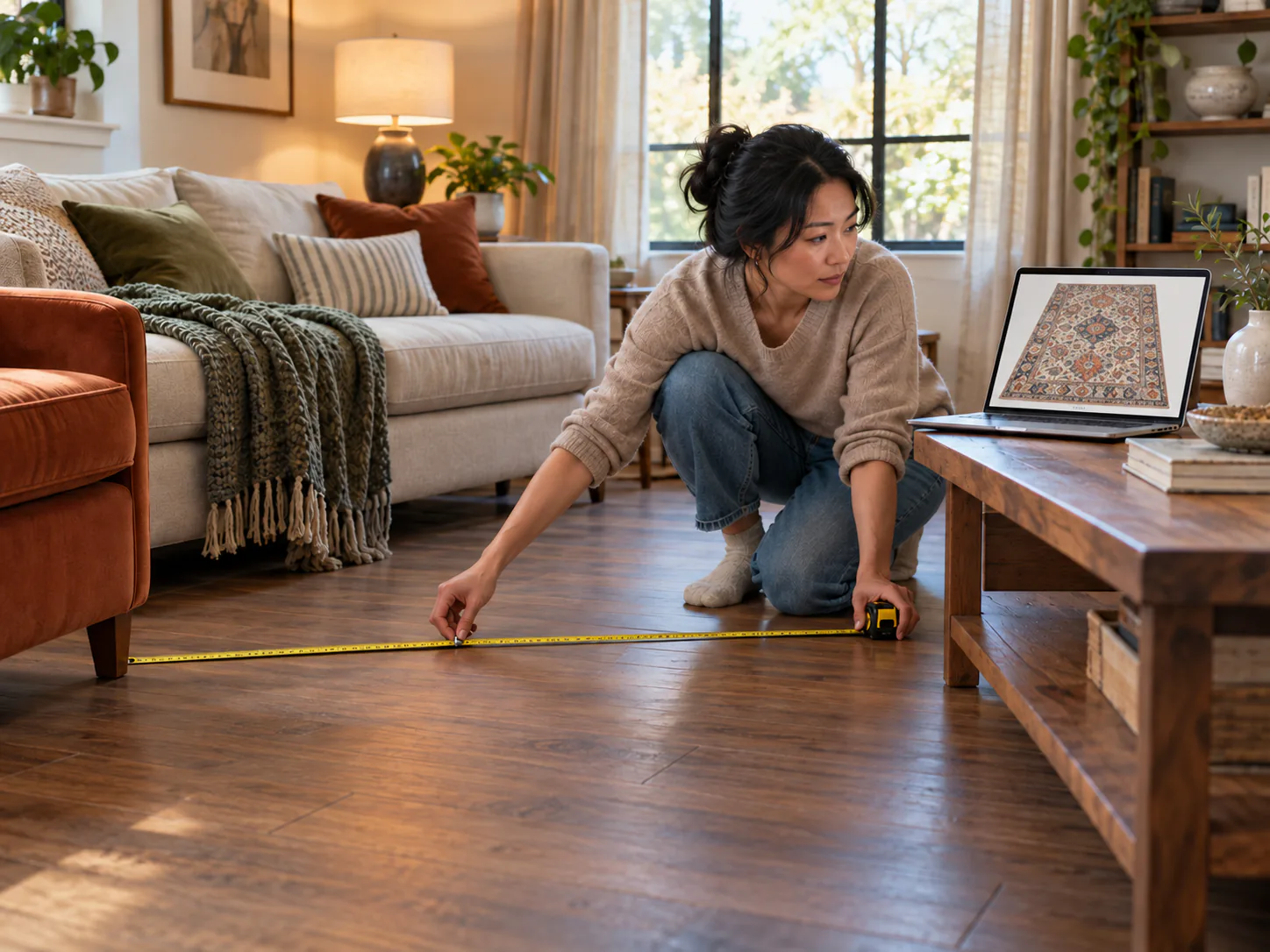
Will it fit my room?
What does it really look like, in my light, next to my things?
Can you deliver it to me, and what does that cost?
Google search
Bid on what shoppers type when they’re ready: the product plus “near me,” your store name, the categories you’re known for. Set your ad locations to where you deliver, not Google’s default. Send each ad to a page for that product or category, not your homepage.
Google Shopping and local inventory
Shopping ads show the product, price and photo before the click. If you have a store, Google can show nearby shoppers what’s on your floor: Google’s own guide to local inventory ads and free local listings explains how in-store products appear on Google.
Facebook and Instagram
Show the piece in a real room with something for scale, then reach the same people again over the weeks they take to decide. Judge these ads on visits and sales over weeks, not the last click.
Amazon (brands)
Fix the listing before you buy ads for it: images in real rooms, dimensions in the first lines, the fabric described. Check what each product earns after Amazon’s fees before putting money behind it. Bulky products first.
Your website and AI answers
Category and product pages that answer the four questions above: what’s available, the dimensions, how it looks, and delivery. That gives Google and AI answers something specific to show when shoppers search for it.
Email to past buyers
Someone who bought a sofa may want the rug, the lamp or the bedroom set next. Your buyer list is an audience you already paid to reach.
Measuring it. Decide before you spend how a showroom sale gets counted: a code in the ad, a call line, or an area with ads against an area without. A sale in the store that nobody connects to the ad looks like an ad that didn’t work.
Sales and seasons. If holiday weekends and seasonal sales matter to your business, plan them from your own sales history, and keep what you show in the ad in stock, so the busiest weeks don’t send shoppers somewhere else.
Our position
Before You Change the Ad, Check What It Points To
When furniture advertising isn’t working, the usual fixes are a new ad, a bigger budget or a deeper discount. Look after the click first: a store whose stock isn’t online, an ad shown to people outside the delivery area, a listing that doesn’t show the size, a price somebody else set. None of those is fixed by a better ad.
- For stores: put the floor where shoppers look. What’s in stock, where you deliver and how to visit, on Google before the shopper decides. Ad locations set to your delivery area.
- For stores: count the showroom sale. We agree with you up front how a sale from an ad gets counted, so the budget follows the ads that fill the floor.
- For brands: the page shows what the shopper can’t touch. We make the listing images, A+ content and Amazon storefront ourselves: color in real light, size in a real room, the material close enough to see.
- For brands: the words match the product. Material, care, size and origin details written from your product’s own information, listing by listing.
- For both: each product earns its budget. Profit per product, after fees, before more ad money goes behind it.
Proof: A heritage consumer brand was selling to Amazon wholesale, and Amazon priced its product at $18 to $20, often at or below cost. We moved it from selling to Amazon wholesale to selling on Amazon itself, rebuilt its A+ content and brand store, repriced it to $40 to $45, and ran ads to protect its brand searches. Revenue fell from $2.14M to $1.18M while unit margin went from near zero to healthy, and chargebacks went away entirely. Read the heritage brand case study.
What we do
Furniture and Home Goods Marketing With ScaledOn
Google and Facebook ads
Search, Shopping, Facebook and Instagram ads, including local inventory ads that show what’s in your store, set to where you sell and deliver, judged on visits and sales.
Search and AI answers
SEO for your store and product pages, including pages written so AI answers can cite them when shoppers ask what to buy.
Amazon
Listings, pricing, account health and Brand Registry, run as one channel.
Listing images, A+ content and storefronts
Made by us: color-true photos, products shown in real rooms, close-ups of the material.
Reporting
Profit per product for online brands; ads tied to showroom sales for stores. Every month, in plain language.
Several stores?
Running more than one location brings its own problems.
How we run it: one point of contact who knows your business, with a team behind them for ads, search, Amazon and creative. AI helps us review search terms, listings and reviews faster. A person signs off on every change.
Who we work with
Built for Furniture Stores and Home Goods Brands
Furniture and home stores, from one showroom to several locations, and home goods and furniture brands selling on their own site and on Amazon. These are examples, not limits.
- Furniture stores
- Home and decor stores
- Furniture brands
- Bedding and textile brands
- Rug and decor brands
- Brands selling on Amazon
How it works
How It Starts
Tell us where you sell
A short form. A showroom, several stores, your own site, Amazon, or all of them.
We look at what shoppers see
Your ads, your listings, what comes up when people search for you and your products, and which products still make money once fees are counted.
You see what we found, before any proposal
If there’s nothing worth fixing, we’ll tell you that too.
We run the analysis before any proposal exists. We call it an Opportunity Review.
See What’s Holding Your Marketing BackYou keep the findings whether or not we work together.
Questions
Furniture Advertising Questions
What’s the best way to advertise a furniture store?
Show shoppers what’s in stock near them, in a real room, with delivery spelled out, on Google search, Google Shopping and Facebook and Instagram. Set your ads to where you deliver. Then count showroom sales against the ads, so the budget follows what fills the floor.
Is Google or Facebook better for furniture ads?
They do different jobs. Google reaches people already looking for a sofa or a store near them. Facebook and Instagram show the piece in a room to people who weren’t looking yet, and reach them again while they decide. Run both when you need both jobs, and measure them on sales rather than clicks.
How much should a furniture store spend on advertising?
Start from what a sale is worth to you and what it costs to get a shopper through the door. We’ll show you what your current spend is buying before recommending more.
Should we advertise our sales?
Yes, for the sales you actually run, planned from your own history. What matters more is that the ad shows what’s on sale, it’s in stock, and the shopper can tell where you deliver.
Do you work with stores, online brands or both?
Both. Furniture and home stores, from one showroom to several locations, and home goods and furniture brands selling on their own site and on Amazon.
What does it cost?
Our recurring work typically starts at $2,000 a month. We’ll give you an exact number once we know what your business needs.
Do I have to sign a long-term contract?
No. There’s no long-term contract, ever. Every month has to earn the next one.
Find Out What Shoppers See Before They Buy From You
We look at your ads, your listings and what comes up when people search for you before any proposal exists. If we can see what’s holding you back, we’ll show you. If we can’t, we’ll say so.
See What’s Holding Your Marketing BackNo cost. No long-term contracts. You keep the findings.